Vehicle maintenance, precision tuning, engine longevity, and diagnostics help daily drivers address buildup before it affects drivability. Ace Tunes pair professional testing with a non-invasive HHO service to support smoother operation, stronger response, and practical DPF and valve care.
Could carbon cleaning hydrogen restore lost power without taking apart the engine? Severe buildup in the combustion chamber can cause rough running, weak throttle response, and lower fuel economy over time.
The process introduces an HHO gas mix through the air intake. This approach targets deposits across connected systems, including the DPF, EGR valve, catalytic converter, injectors, and combustion chamber. It supports balanced combustion and may help reduce emissions.
Ace Tunes combines diagnostics, precision maintenance, and practical recommendations for daily drivers. Learn more about its HHO engine service before choosing the right maintenance plan for your vehicle.
Key Takeaways
- Severe buildup can affect drivability, fuel use, and overall performance.
- HHO gas enters through the intake without major disassembly.
- DPF, valves, injectors, and exhaust parts require connected care.
- Professional diagnostics help identify the cause of poor response.
- Ace Tunes supports reliable maintenance for everyday vehicles.
Why Carbon Deposits Reduce DPF and Valve Performance
Small changes in fuel delivery can create large drivability problems. When combustion lacks efficiency, unburned particles collect inside key engine components and limit airflow, power, and fuel economy.
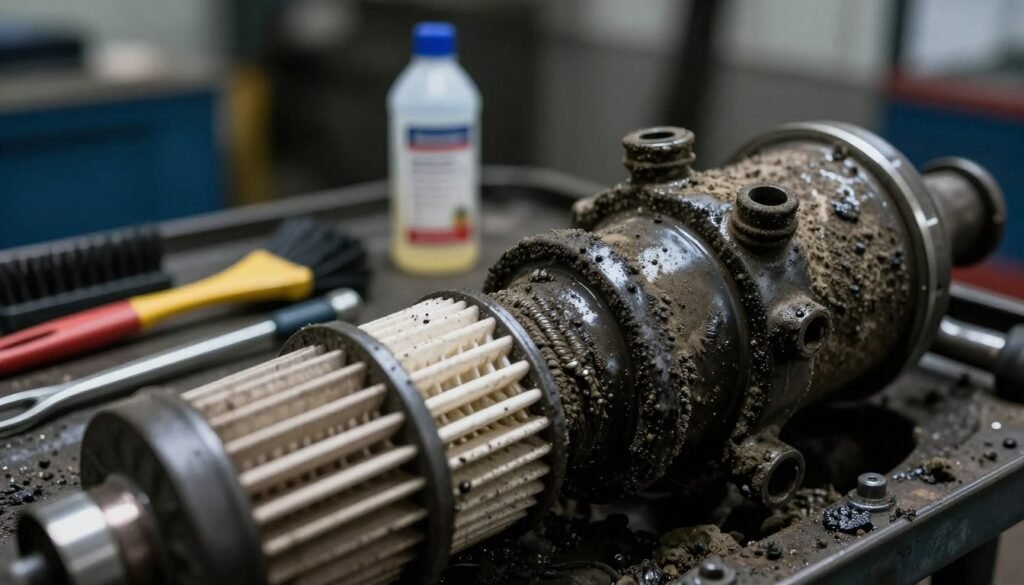
How Soot Buildup Affects the DPF, EGR Valve, and Combustion Chamber
Short trips and low-speed commuting can raise soot loading in diesel engines. A restricted DPF increases exhaust resistance, while buildup near the EGR valve and combustion chamber can affect idle quality, injector reaction, and acceleration.
- Reduced airflow may increase fuel consumption.
- Restricted exhaust flow can lower engine performance.
- Deposits may disturb combustion quality and throttle response.
When Daily Drivers Should Consider Engine Carbon Cleaning
Before authorizing an engine carbon cleaning service, request an ECU scan if the vehicle shows a warning light, rough running, hard starting, or repeated regeneration issues. The scan can reveal faults that a service alone cannot correct.
Review maintenance history, driving habits, and fuel economy. A cleaning process differs from synthetic fluid analysis and drivetrain health checks. For practical guidance, contact the vehicle maintenance team.
How Carbon Cleaning Hydrogen Works Inside the Engine
HHO is a hydrogen-oxygen mix made from water and an electrolyte. An electric current separates the water into gases. A trained technician controls gas flow, engine speed, and temperature during the service.
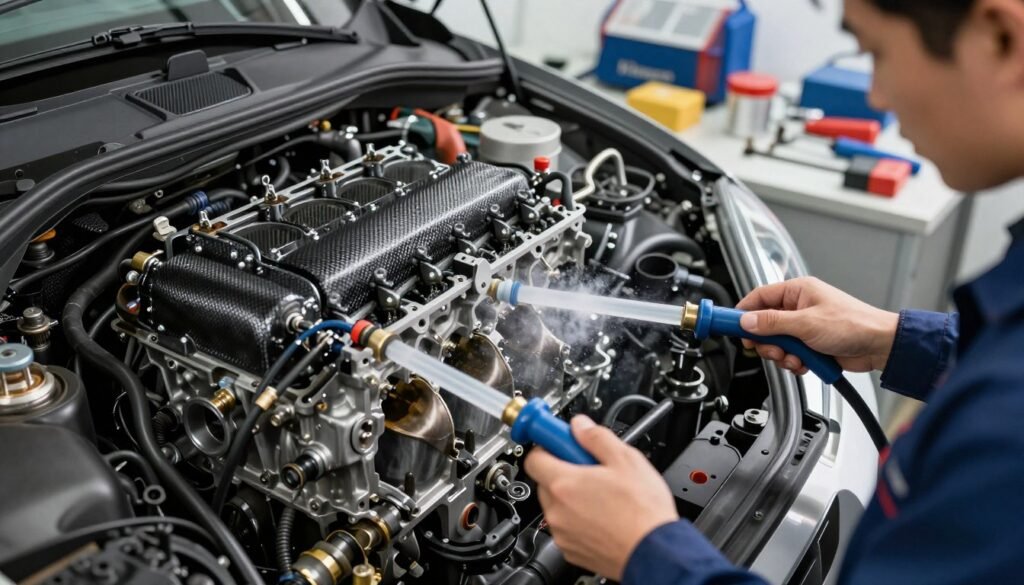
How HHO Gas Supports the Carbon Cleaning Process
The gas enters through the intake manifold and moves into the combustion chamber. Heat and pressure expose deposits to proposed reactions. Technical material identifies nickel and cobalt traces as possible catalysts.
Key reactions include C + 2H2 → CH4, C + O2 → CO2, and 2C + O2 → 2CO. Sabatier reactions may form methane and water: CO2 + 4H2 → CH4 + 2H2O. Then, CH4 + 2O2 → CO2 + 2H2O, allowing vapor and gases to leave through the exhaust.
A C-600 machine or similar unit may support this process without dismantling the engine. Results vary, so technicians should inspect the EGR, DPF, catalytic converter, and electronic controls. This step helps separate deposits from mechanical faults and avoids promises about power, emissions, or fuel economy.
How to Verify Results and Avoid Common Cleaning Mistakes
Reliable testing turns a service visit into useful maintenance data. Record vehicle readings before and after the HHO process, then review longer-term fuel economy and repair costs.
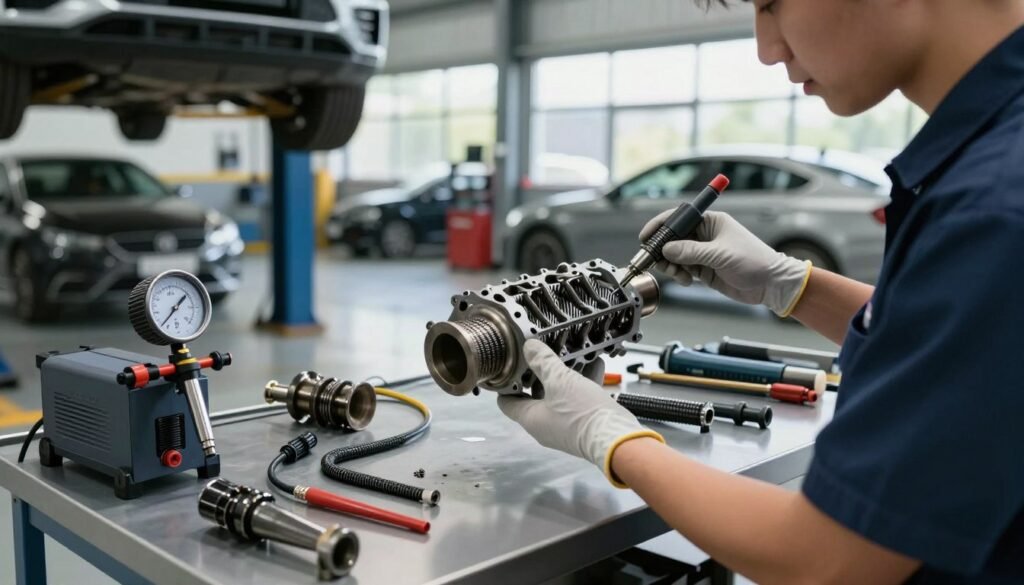
Before-and-After Checks for DPF Back Pressure, Soot, and Airflow
An opacimeter, such as an MP-0.1 Diesel Smoke Meter, measures exhaust opacity in 1/m units. An OBD-II tool records DPF back pressure in MPa, airflow in g/sec, and soot accumulation in grams.
| Checkpoint | Immediate Check | Long-Term Review |
|---|---|---|
| Exhaust and DPF | Opacity, pressure, airflow, soot | Regeneration history |
| Visual condition | Leaks, hoses, sensors, EGR valve | Repeat fault signs |
| Driving results | Idle, response, and power | Fuel consumption and economy |
| Ownership cost | Record service findings | Compare maintenance costs |
Common Mistakes That Can Hide Underlying Engine Problems
Do not start engine carbon cleaning before checking injector faults, boost leaks, control signals, DPF sensors, stored codes, and compression. An electric-current HHO mix may assist removing deposits, but it cannot repair damaged components, failed actuators, or drivetrain faults. Review emissions service guidance before choosing a cleaning process.
Conclusion
Daily drivers can benefit from a measured approach to DPF and valve care. Professional testing can confirm whether carbon deposits limit airflow, combustion, or engine performance. HHO service may support removing carbon when the restriction comes from deposits rather than failed components.
Track fuel efficiency and fuel economy across similar trips. Do not assume quick gains after the process. Trained technicians must manage HHO equipment, hydrogen, oxygen, and exhaust safety during service.
ECU scans, visual checks, and DPF data still guide sound vehicle maintenance. Pair carbon cleaning with scheduled service, synthetic fluid analysis, precision tuning, and drivetrain checks to support engine longevity. For evidence-based recommendations, explore Ace Tunes for dependable diagnostics and performance support.