Have you ever wondered why rust seems to appear out of nowhere on your vehicle? For truck owners, understanding rust is crucial for maintaining the vehicle’s value over the years. Rust is not just an aesthetic issue; it can lead to significant structural damage if left untreated. Learning how to fix rust on a truck early can help prevent costly repairs, extend the life of your vehicle, and keep it looking its best for years to come.
When rust appears, it is essential to act swiftly. This persistent problem can spread quickly, targeting exposed metal surfaces. Many people find that addressing small repairs early can save them from costly bodywork later on. An expert at a local Maaco shop can guide you through the process of identifying and treating corrosion before it escalates.
Taking the time to follow each step correctly ensures you don’t overlook important aspects that could lead to further damage. If you’re ready to tackle rust issues, be prepared to invest the necessary effort for a professional-looking outcome.
Key Takeaways
- Rust can significantly decrease your truck’s value if not addressed promptly.
- Small repairs can prevent more extensive damage and costs in the future.
- Local expert guidance can help in effectively treating corrosion.
- Following the correct steps is vital for successful repairs.
- Protecting your truck from the elements is essential for longevity.
Introduction and Overview
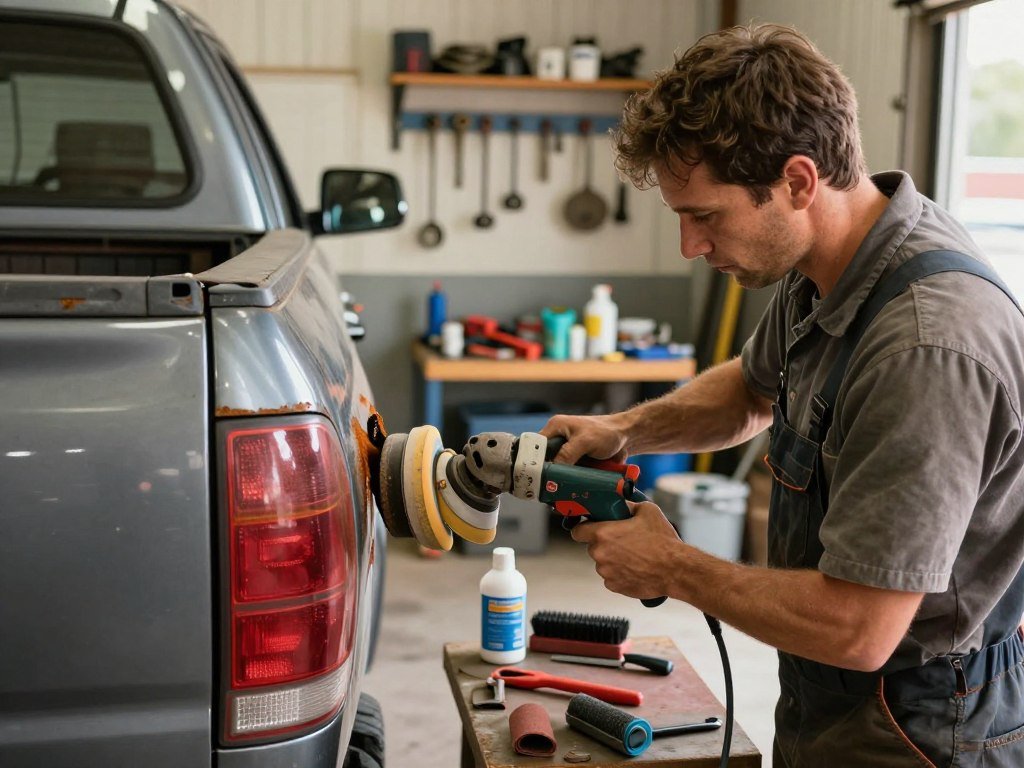
Rust can sneak up on any vehicle, especially if not properly maintained. For truck owners, understanding the rust process is crucial. This knowledge helps save time and money on future bodywork.
Many people rely on expert services from local Maaco shops for efficient rust repair and maintenance. A high-quality paint job is essential for protecting your vehicle against rust over the years.
When you consult an expert, you learn that rust is constantly seeking exposed metal on your truck. Regular inspections allow you to catch damage early, preventing the need for major repairs.
If you notice rust, addressing it immediately is vital. This action helps prevent corrosion from spreading to other panels, ensuring your truck remains in good condition.
| Maintenance Tips | Benefits | Frequency |
|---|---|---|
| Regular Inspections | Catch damage early | Every 3 months |
| Quality Paint Job | Protects against rust | Every 5 years |
| Consult Experts | Efficient repairs | As needed |
For more detailed services, check out custom chroming services that can enhance your truck’s appearance and protection.
Understanding Rust on Truck Metal
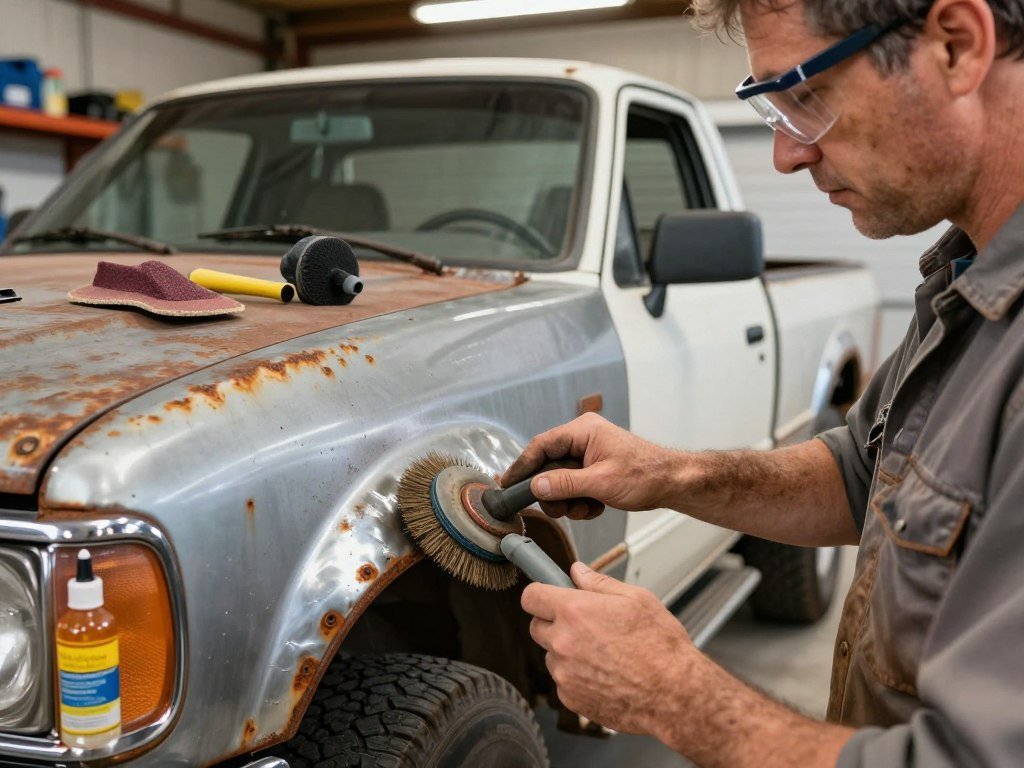
Rust can silently compromise your vehicle’s integrity if not detected early. This process often begins at vulnerable points where metal is exposed. Common areas include connection points like sunroofs, trims, and moldings. Regular inspections are vital for truck owners to identify potential issues.
Use a flashlight to examine critical areas such as wheel wells, the undercarriage, and door rocker panels. These spots are prone to rust development, especially when water and salt accumulate. Surface rust often appears as a thin layer of oxidation. If treated promptly, it can prevent deeper damage to the truck frame.
Identifying the type of rust damage is crucial. For instance, deep corrosion requires immediate attention, while surface rust can often be managed with simple treatments. If you discover holes in the metal body, address them right away to maintain structural integrity.
| Type of Rust | Appearance | Action Required |
|---|---|---|
| Surface Rust | Thin layer of oxidation | Clean and treat |
| Deep Corrosion | Holes or pitting | Immediate repair needed |
| Rocker Panel Rust | Rust under the door | Inspect and seal |
Regularly checking these vulnerable areas helps stop the spread of rust before it causes significant damage to your truck frame. For more detailed insights, visit this resource for effective rust management.
Essential Tools and Materials for Effective Repair

Understanding the right tools and materials is key to addressing corrosion effectively. For successful rust repair, having a high-quality repair kit is essential. This kit should include a wire brush, sandpaper, and the correct primer tailored for your truck.
Selecting the right paint and clear coat is crucial. It helps match the existing finish on your truck body while preventing future corrosion. A wire brush is vital for removing loose rust from the metal surface, preparing it for a new layer of primer.
When working on the truck frame, ensure your kit contains specialized products designed to neutralize rust and protect the metal. Applying a high-quality primer creates a protective coat that prevents moisture from reaching bare metal.
Always choose a paint compatible with your primer. This choice ensures a smooth finish across the repaired area of your truck.
Preparing Your Truck for Rust Repair
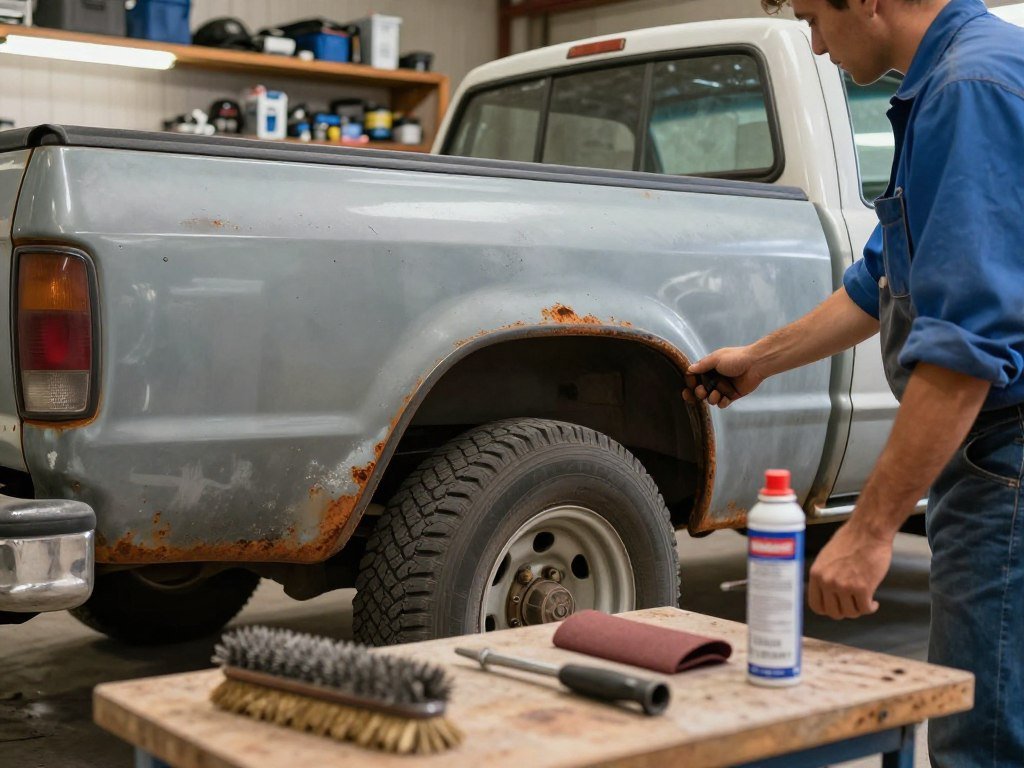
Preparing your truck for repair is a crucial step in maintaining its longevity. A well-organized workspace can significantly impact the effectiveness of your rust treatment efforts.
Before you begin any rust repair, ensure your workspace is well-ventilated. Having the necessary safety gear is essential to protect yourself from harmful dust and chemicals.
Next, create a clean and dry environment for your truck. This setup allows you to safely remove rust without contaminating the surrounding area.
Always work in a space that provides ample room to move around the truck. This freedom ensures you can reach every affected surface easily.
Proper workspace setup is vital for preventing the spread of rust dust. It also ensures that your repair materials adhere correctly to the metal.
Lastly, take the time to organize your tools before starting. This preparation will make the entire repair process smoother and safer.
How to Fix Rust on a Truck: Step-by-Step Process
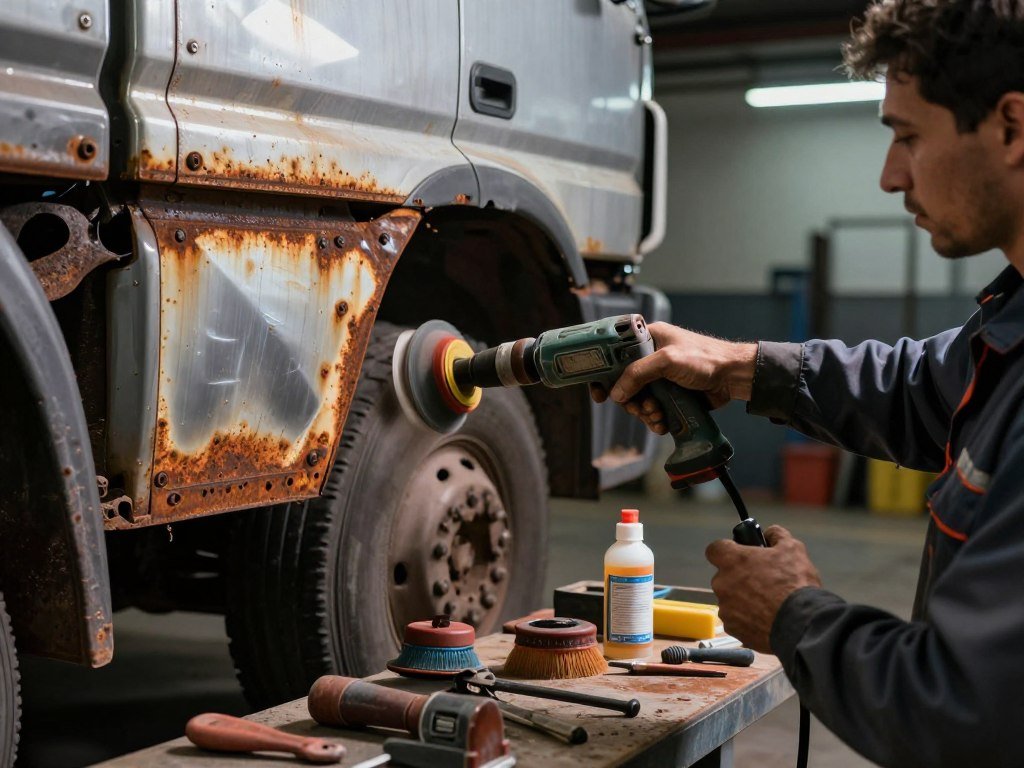
Rust is a persistent issue that can catch truck owners off guard. Addressing it quickly is vital for preserving your vehicle’s integrity. This section outlines the essential steps to manage rust effectively.
Initial Cleaning and Rust Removal
Start the rust removal process by using a wire brush to scrub away loose debris. This action exposes the bare metal underneath the rust spot. Following this, use sandpaper to sand the area until it is smooth and free of remaining corrosion.
Sanding and Surface Preparation
After cleaning, apply a high-quality rust converter to the bare metal. This step halts the chemical process of corrosion before you apply the primer layer. Once the converter has dried, it’s time to apply thin coats of primer, ensuring full coverage to prevent future rust.
Application of Rust Converter, Primer, and Paint
Once the primer is dry, apply thin coats of paint followed by a clear coat. This process helps match the original finish of your truck. If you encounter deep holes in the truck frame, a specialized repair kit may be necessary to ensure structural integrity.
| Step | Action | Purpose |
|---|---|---|
| 1 | Use wire brush | Remove loose debris |
| 2 | Sand with sandpaper | Smooth surface |
| 3 | Apply rust converter | Stop corrosion |
| 4 | Apply primer | Prevent future rust |
| 5 | Apply paint and clear coat | Match original finish |
Taking the time to follow each step carefully will ensure that your rust repair lasts for many years and protects your truck from water damage.
Advanced Techniques for Effective Rust Repair
Effective rust repair requires a blend of techniques and products tailored to your truck’s needs. Utilizing rust converters and clear coats can significantly enhance the durability of your repairs.
When dealing with deep corrosion, an expert might recommend using a professional-grade rust converter. This product chemically transforms rust into a stable, paintable surface. If you encounter deep holes in the metal, ensure the repair is structurally sound by using a reinforcing patch or specialized filler.
Applying multiple thin coats of clear coat over your paint provides a durable layer that protects the truck from environmental damage over time. Always remove rust completely from the area before applying any converter or primer for complex repairs.
Advanced techniques for a rust truck frame involve using a high-quality converter to reach areas where a wire brush cannot easily fit. Following the manufacturer’s instructions is crucial to ensure the chemical reaction creates a solid base for your paint.
Using a clear coat correctly is the final step in the process to ensure your fix rust project looks professional and lasts for years.
Common Mistakes to Avoid During Rust Repair
Rust can often be an unseen enemy for truck owners, lurking beneath the surface. Understanding common mistakes is crucial for effective repairs. Avoiding these pitfalls can ensure your efforts yield lasting results.
Over-sanding and Inadequate Surface Preparation
Here are some frequent errors that can undermine your rust repair:
- Over-sanding the metal can thin the body panel, creating new holes that are hard to repair.
- Inadequate surface preparation often leads to premature paint failure, allowing rust to return shortly after the repair.
- Failing to remove all traces of corrosion before applying primer can cause rust to spread under the new paint.
- When working on the truck frame, avoid sanding too aggressively, as this can weaken the structural integrity of the metal.
- Always clean the area thoroughly; any remaining dust or debris will prevent the primer from bonding properly.
Avoiding these mistakes is essential for anyone who wants to effectively manage rust and ensure their repairs last for a long time.
Maintenance Tips and Preventing Future Rust Damage
Maintaining your vehicle’s exterior is crucial for preventing corrosion. Regular inspections can help you catch potential issues before they escalate. A Maaco expert can identify rust damage early, protecting your truck frame’s integrity.
Regular Inspections and Cleaning
Washing and waxing your truck at least once a month is essential. Pay special attention to the wheel wells and undercarriage to remove salt and water. Cleaning carpets and protective mats is also important, as salt from footwear can lead to hidden rust.
Proper Washing, Waxing, and Protective Measures
Using a high-quality wax adds a protective layer, helping your paint and clear coat resist the elements for years. If you spot a small rust area, address it immediately to prevent further damage to your truck body.
Keeping your truck clean and dry is the best way to extend its life. Many people find that a consistent maintenance schedule is the most effective way to prevent rust and keep their truck looking new.
| Maintenance Activity | Frequency | Purpose |
|---|---|---|
| Regular Inspections | Every 3 months | Identify rust damage early |
| Wash and Wax | Monthly | Remove salt and water |
| Clean Carpets | Monthly | Prevent hidden rust |
Conclusion
Unexpected rust development can be a frustrating issue for truck owners. Learning the process of addressing this concern is rewarding. It saves money and extends your vehicle’s life for many years.
By following each step carefully and using the right materials, you can achieve professional results. These results protect your truck from future damage.
Remember, staying proactive with maintenance is crucial. Whether applying thin coats of paint or performing major repairs, consistency and attention to detail are key.
Many people find that managing their own repairs helps them understand how to maintain their truck’s value. We hope this guide has equipped you with the knowledge and confidence to effectively manage rust and keep your truck in excellent condition.