“The greatest danger in times of turbulence is not the turbulence; it is to act with yesterday’s logic.” – Peter Drucker. This idea perfectly reflects modern vehicle maintenance, where traditional methods aren’t always enough to combat carbon buildup. Over time, both gasoline and diesel engines accumulate carbon deposits that reduce power, lower fuel efficiency, increase emissions, and may lead to costly repairs. HHO hydrogen cleaning offers a modern, non-invasive solution by safely removing carbon buildup, helping restore engine performance, improve efficiency, and extend the life of your engine.
This article serves as a beginner’s guide to understanding HHO carbon cleaning technology. You will learn how this innovative process works and why it is becoming a popular solution for vehicle maintenance. HHO, or oxyhydrogen, is a gas mixture created through the electrolysis of water. It offers a non-invasive, chemical-free method to clean engine components in just 30 to 45 minutes.
As we explore the science behind HHO gas and its interaction with engine combustion, you will discover the benefits of this technology for both gasoline and diesel engines. By the end of this guide, you will have a solid understanding of how HHO carbon cleaning can enhance engine performance and fuel efficiency.
Key Takeaways
- Carbon build-up affects engine performance and fuel efficiency.
- HHO carbon cleaning is a quick, non-invasive solution.
- This technology works for both gasoline and diesel engines.
- HHO gas is produced through water electrolysis.
- Readers will learn about the benefits and safety of HHO technology.
Introduction to HHO and Its Importance in Engines
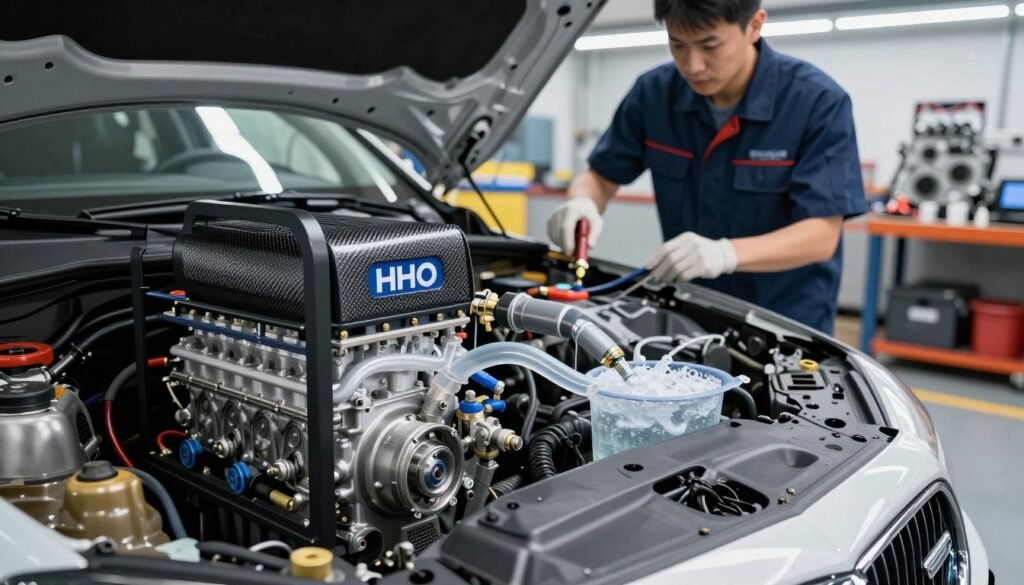
To appreciate engine maintenance, one must first understand the importance of HHO gas. This unique gas, a mixture of hydrogen and oxygen, is produced through the electrolysis of water. By breaking down water (H₂O) into its elemental components, HHO gas becomes a valuable asset in modern automotive technology.
Also known as oxyhydrogen or Brown’s gas, HHO gas has roots dating back to the late 18th century. Its practical applications emerged in the 20th century, primarily in cutting and welding. However, its role in engines is where it truly shines.
When HHO gas is introduced into an engine through the air intake, it combines with the fuel-air mixture during normal combustion. This interaction creates a controlled thermal reaction, effectively breaking down and removing carbon deposits that accumulate over years of operation. The beauty of this process lies in its non-invasive nature; it requires no disassembly or harsh chemicals.
Carbon build-up is particularly problematic in modern gasoline and diesel engines. It affects critical components such as the combustion chamber, pistons, injectors, and turbochargers. This build-up can lead to reduced fuel efficiency, diminished performance, increased emissions, and potential engine damage.
Vehicle owners are increasingly seeking cost-effective, non-invasive solutions to combat these issues. HHO technology offers an environmentally friendly alternative to traditional engine maintenance methods. Each kilogram of HHO is approximately equivalent to three kilograms of LPG, with a calorific value of around 40,000 kcal/kg, showcasing its energy potential.
Understanding what HHO gas is and why carbon build-up matters is the first step toward appreciating the value of HHO carbon cleaning as a maintenance solution. As the automotive industry continues to evolve, embracing innovative technologies like HHO can lead to improved engine performance and efficiency.
The Science and Process of HHO Carbon Cleaning
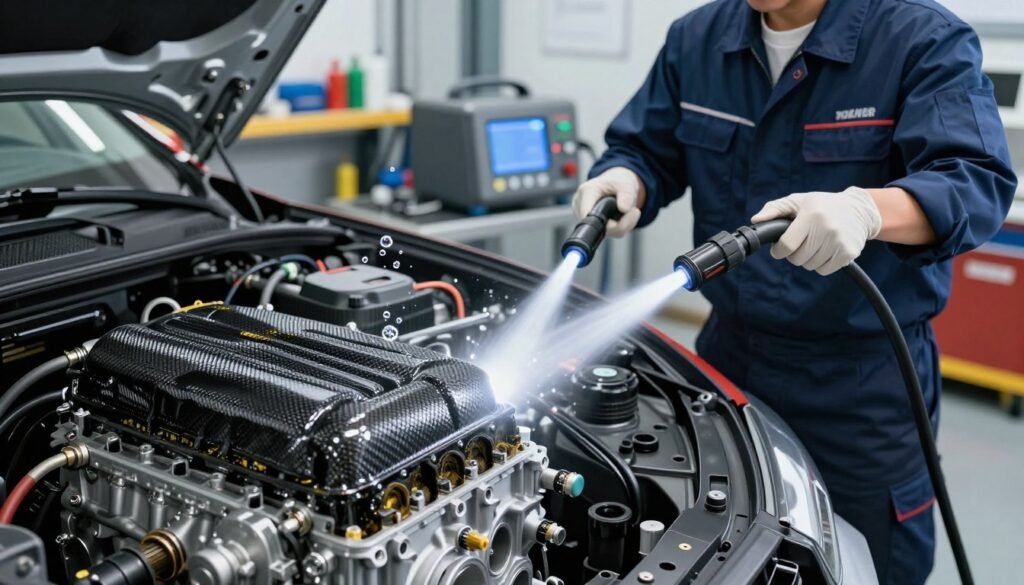
The principles behind HHO carbon cleaning reveal how it enhances engine performance. This innovative process relies on the generation of HHO gas through electrolysis, which is a simple yet effective method. By applying an electric current to water containing an electrolyte, water molecules split into hydrogen and oxygen gases. These gases then combine to form HHO gas, a powerful cleaning agent.
Generation of HHO Gas through Electrolysis
There are two main types of HHO generators used in this process: alkaline and PEM (Proton Exchange Membrane) systems. Alkaline generators use a potassium hydroxide or sodium hydroxide solution, which is cost-effective but has higher energy consumption. In contrast, PEM systems utilize pure water and are more efficient, requiring less energy to produce HHO gas.
How HHO Gas Interacts with Engine Combustion
When HHO gas is introduced into the engine’s air intake system, it mixes with the incoming air and fuel. Hydrogen burns much faster than traditional fuels, enhancing combustion efficiency. This faster burn creates higher temperatures, which help break down carbon deposits without damaging engine components.
Areas of the Engine Cleaned by HHO Carbon Cleaning
The cleaning process targets several critical areas within the engine. It effectively cleans the combustion chamber, piston crowns, fuel injectors, intake and exhaust valves, and the turbocharger. In some cases, it can even partially clean the diesel particulate filter. This thorough cleaning improves overall engine performance and efficiency.
Safe and Chemical-Free Cleaning Process
One of the most appealing aspects of HHO carbon cleaning is its safety. The process requires no engine disassembly and uses no harsh chemicals. The only byproduct of the reaction is water vapor, making it an environmentally friendly solution. The entire process typically takes between 30 and 45 minutes, providing a quick and effective maintenance option for vehicle owners.
Benefits of HHO Carbon Cleaning for Gasoline Engines
Gasoline engines face numerous challenges due to carbon build-up. HHO carbon cleaning offers significant advantages for vehicle owners looking to enhance their engine’s performance. This innovative solution not only improves efficiency but also reduces harmful emissions, making it a wise choice for modern automotive maintenance.
Improved Throttle Response and Fuel Efficiency
One of the most noticeable benefits of HHO carbon cleaning is the improvement in throttle response. By removing carbon deposits from intake valves and injectors, this process allows for smoother and more immediate acceleration. Vehicle owners often report a more responsive driving experience.
Additionally, fuel efficiency sees a remarkable boost. Studies indicate that after a complete HHO cleaning treatment, fuel consumption can be reduced by up to 10-15%. This translates to noticeable savings at the pump, making it a cost-effective solution for regular vehicle maintenance.
Reduction of Emissions and Combustion Failures
HHO carbon cleaning also plays a vital role in reducing harmful emissions. Research shows that hydrocarbon (HC) emissions can decrease by up to 30%, while carbon monoxide (CO) emissions can drop by as much as 25% under various load conditions. This not only helps in meeting environmental regulations but also contributes to cleaner air.
Moreover, the process helps prevent combustion failures and misfires that often trigger the check engine light. By ensuring a more efficient combustion process, vehicle owners can reduce the likelihood of costly diagnostic visits and repairs.
Maintenance Advantages for Gasoline Engines
Another significant advantage of HHO carbon cleaning is its non-invasive nature. The process requires no disassembly and uses no harsh chemicals, which minimizes the risk of damage to sensitive engine components. This makes it a safer option for maintaining gasoline engines.
Furthermore, the addition of HHO gas can be optimized with ignition timing adjustments. Since hydrogen burns faster than gasoline, retarding the ignition timing closer to top dead center can further enhance engine efficiency.
Typically, a single session using professional HHO generator equipment takes only 30 to 45 minutes. This quick turnaround makes it a practical solution for vehicle owners who want to keep their engines running smoothly.
| Benefit | Description |
|---|---|
| Improved Throttle Response | Removes carbon deposits for smoother acceleration. |
| Fuel Efficiency | Reduces fuel consumption by up to 10-15%. |
| Emission Reduction | HC emissions reduced by 30% and CO emissions by 25%. |
| Prevention of Combustion Failures | Reduces misfires that trigger the check engine light. |
| Non-Invasive Process | No disassembly or harsh chemicals required. |
| Quick Maintenance | Process takes only 30-45 minutes. |
In conclusion, for gasoline engine owners, HHO carbon cleaning offers a cost-effective alternative to more invasive engine repairs. It delivers measurable improvements in performance, fuel economy, and emissions compliance, making it a smart choice for anyone looking to enhance their vehicle’s efficiency.
Benefits of HHO Carbon Cleaning for Diesel Engines
The significance of HHO carbon cleaning in diesel engines cannot be overstated, as it addresses critical maintenance needs. Diesel engines often face unique challenges, including carbon build-up that can affect performance and efficiency. HHO carbon cleaning provides targeted solutions to these issues, ensuring optimal engine health.
Restoration of Engine Torque and Fuel Consumption Reduction
One of the primary benefits of HHO carbon cleaning is the restoration of lost engine torque. By removing carbon deposits from the combustion chamber and injectors, this process allows for more complete fuel combustion. As a result, diesel engines can deliver improved power and performance.
Real-world testing has shown significant fuel consumption reductions. Many trucks experience improvements in fuel economy ranging from 10% to 18%. For instance, a specific test on a FAW JieFang heavy-duty semi-trailer demonstrated a remarkable 17.1% improvement, with average consumption dropping from 33.5L/100KM to 27.8L/100KM over a 150KM test.
Prevention of EGR and Particulate Filter Saturation
HHO carbon cleaning also plays a vital role in preventing EGR (Exhaust Gas Recirculation) valve and diesel particulate filter saturation. Regular cleaning helps prevent the buildup of carbon deposits that can lead to costly replacements and system failures. This proactive maintenance is crucial for the longevity of diesel engines.
Prolonging Turbo Life and Passing Emission Tests
Another advantage of HHO carbon cleaning is its ability to prolong turbocharger life. By removing carbon deposits from turbo vanes and housings, the process reduces stress on the turbo system, extending its operational life. Furthermore, HHO cleaning enhances overall combustion efficiency, making it easier for diesel vehicles to pass emission tests.
This is especially valuable for commercial fleets that must comply with increasingly strict emissions regulations. HHO carbon cleaning is an essential preventive maintenance solution, particularly for diesel vehicles that operate at low revs or make frequent short journeys, conditions that accelerate carbon buildup.
| Benefit | Description |
|---|---|
| Restoration of Engine Torque | Removes carbon deposits for improved power delivery. |
| Fuel Consumption Reduction | Real-world tests show 10-18% fuel economy improvement. |
| Prevention of EGR Saturation | Helps avoid costly replacements and system failures. |
| Prolonging Turbo Life | Reduces stress on turbo systems by cleaning deposits. |
| Emission Test Compliance | Improves combustion efficiency for easier passing of tests. |
| Versatile Solution | Effective for both light-duty and heavy-duty diesel vehicles. |
In conclusion, for diesel engine owners and fleet operators, HHO carbon cleaning offers a proven, non-invasive method to maintain engine health. This process not only enhances performance but also reduces operating costs and ensures compliance with emissions regulations. For more information on HHO cleaning services, visit Ace Tunes.
Understanding HHO Generators: Technology and Safety
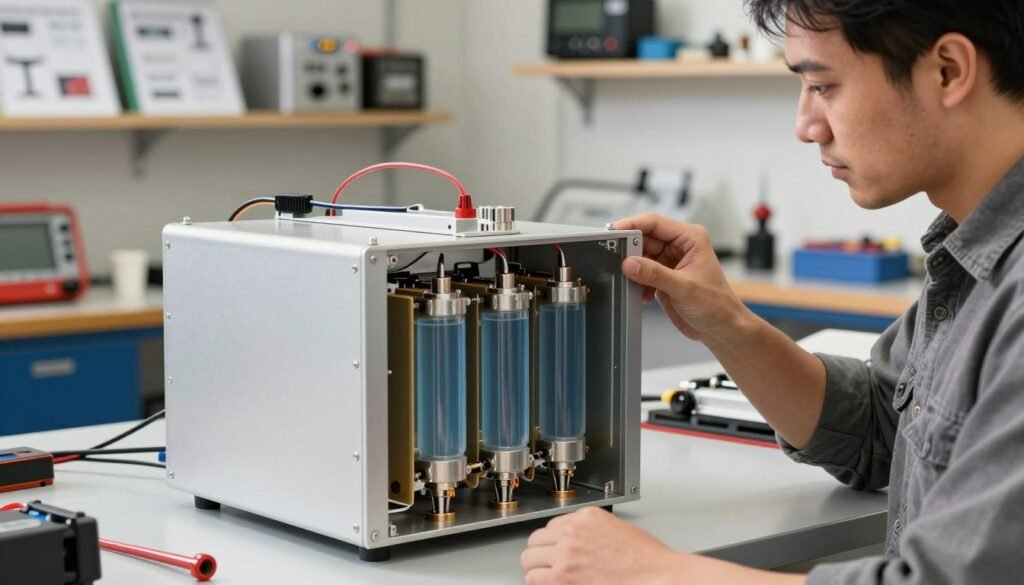
Understanding the technology behind HHO generators is essential for maximizing their benefits in engine maintenance. The two primary types of HHO generators are alkaline systems and PEM systems. Each type has its own unique features and operational characteristics.
Types of HHO Generators: Alkaline vs. PEM Systems
Alkaline generators utilize a liquid electrolyte solution, typically potassium hydroxide (KOH) or sodium hydroxide (NaOH). They are known for their lower initial setup costs. However, they come with higher energy consumption and require frequent maintenance due to the corrosive mist produced during operation.
On the other hand, PEM generators use a solid proton exchange membrane and require only pure water. While they have a higher upfront cost, they offer superior electrolysis efficiency and lower energy consumption. This cleaner operation makes them a more attractive option for many users.
Optimizing Engine Performance with HHO Equipment
To optimize engine performance with HHO equipment, a microcomputer is often necessary. This device adjusts ignition timing, as hydrogen burns much faster than gasoline. Retarding the timing closer to top dead center can enhance overall efficiency and performance.
Safety Considerations and Maintenance Practices
Safety is a critical aspect when working with HHO generators. These systems produce both hydrogen and oxygen, which can be hazardous if not properly managed. Robust safety mechanisms, proper ventilation, and regular inspections are essential to prevent incidents.
Maintenance practices include regular checks of electrodes for corrosion and residue buildup. In alkaline systems, monitoring the stability of the electrolyte solution is crucial. Ensuring that the electronic system remains balanced is also vital for consistent gas production.
Economic Impact: Fuel Savings and Emission Reduction
The economic impact of using HHO generator technology is significant. Real-world testing has shown fuel savings of 10% to 18%. Additionally, emissions can be reduced by up to 30% for hydrocarbons and 25% for carbon monoxide. The energy consumption required to produce 1 kg of HHO ranges from 5 to 6 kWh, making this process economically viable.
Investing in HHO generator equipment can lead to a quick return on investment, especially for workshops that incorporate this service into regular maintenance or for fleet operators managing multiple vehicles.
| Generator Type | Advantages | Disadvantages |
|---|---|---|
| Alkaline | Lower initial costs, simple setup | Higher energy consumption, corrosive mist |
| PEM | Higher efficiency, cleaner operation | Higher upfront costs |
In conclusion, understanding the technology, practicing proper safety protocols, and recognizing the economic benefits are crucial for anyone considering the use of HHO generators for engine carbon cleaning.
Conclusion
In the realm of automotive maintenance, embracing innovative solutions is crucial for enhancing engine performance. HHO carbon cleaning stands out as a scientifically grounded, non-invasive process that effectively removes carbon deposits from both gasoline and diesel engines.
This technology offers numerous benefits, including improved fuel efficiency of up to 15 percent, restored engine performance, and reduced harmful emissions. The quick cleaning process takes only 30 to 45 minutes and requires no engine disassembly, making it ideal for busy vehicle owners and workshops alike.
Moreover, HHO technology helps lower operating costs while contributing to cleaner air. With years of research validating its effectiveness, HHO carbon cleaning is a preventive maintenance strategy that aligns with both economic and environmental goals.
As engine technology continues to evolve, consider exploring HHO carbon cleaning as a viable solution for maintaining engine health and improving fuel economy. For more information on HHO cleaning services, visit Ace Tunes.