At a Glance: Vehicle maintenance, precision tuning, engine longevity, and diagnostics shape a smart winter choice for daily drivers. Power service diesel fuel supplement with Cetane Boost is an anti-gel for diesel fuel below 30°F, with compatibility across ULSD and biodiesel blends.
Can one winter treatment help prevent gelling and keep a work truck ready for the morning commute? This guide explains how the product works, when to add it, and what to check before use. It also covers filter icing and reliable operation during harsh cold snaps.
The formula is designed for all diesel engines when used as directed. It suits standard diesel, ULSD, and biodiesel blends, giving American drivers a broad compatibility option as temperatures fall.
For a practical maintenance plan, visit Ace Tunes. Its expertise connects winter care with inspections, tuning, and long-term engine health.
Key Takeaways
- Designed for cold conditions below 30°F.
- Helps reduce gelling risk during winter driving.
- Supports protection against filter icing.
- Works with ULSD and biodiesel blends.
- Follow the label for safe, effective use.
Power Service Diesel Fuel Supplement Benefits for Winter Diesel Fuel
Winter treatment helps maintain reliable starting when freezing weather arrives. Power Service Diesel Fuel Supplement is designed for use below 30°F and works with ULSD and biodiesel blends.
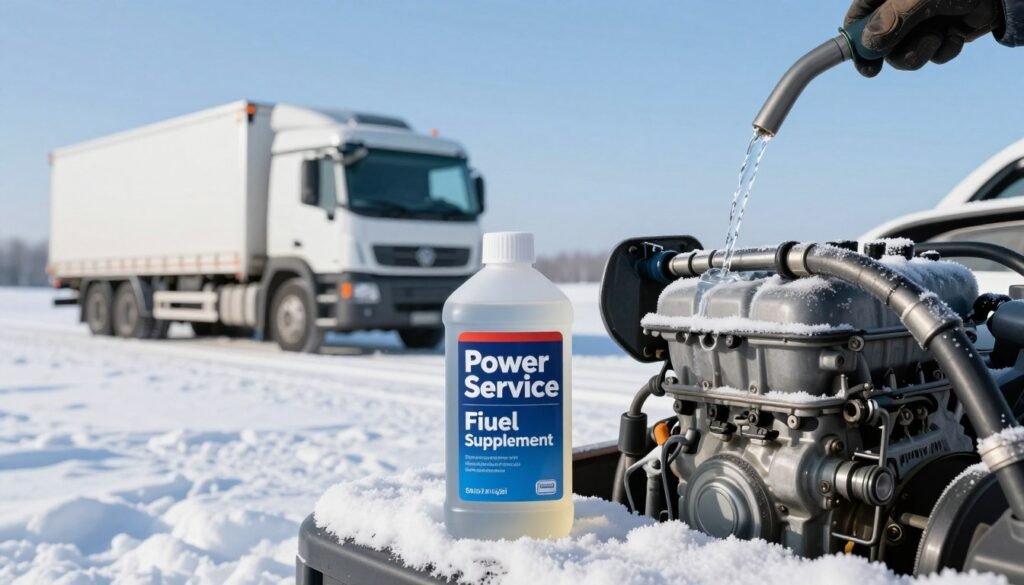
Preventing Gelling and Fuel-Filter Icing
As temperatures drop, natural wax in diesel can thicken and restrict flow. If gelling begins, wax may plug the filter and leave the engine without adequate supply.
Add the treatment before a fuel gel forms. For example, treat the tank before an overnight forecast below 30°F instead of waiting for a no-start condition. This timing helps prevent fuel gelling during cold winter months.
Fuel-filter icing presents a separate risk. Water in the system can freeze inside the filter, while wax gelling comes from the fuel itself. The treatment addresses both winter concerns and protects fuel-filter flow.
Cetane Boost and Faster Cold Starts
The fuel supplement cetane formula provides a cetane boost for freezing conditions. Higher cetane can support faster cold starts and smoother ignition in a diesel engine.
Use it as temperatures approach the label’s cold-weather range. Regular checks of the filter, battery, and glow plugs also support dependable winter operation.
How Power Service Diesel Fuel Supplement Protects Diesel Systems
Cold-weather reliability also depends on how well the injection system handles wear. The formula supports clean delivery and steady operation across changing temperatures. It is suitable for every diesel engine and works with ULSD, biodiesel blends, and other approved fuels.

Slickdiesel Lubricator for Fuel Pumps and Injectors
Slickdiesel Lubricator helps protect pumps and injectors from added wear linked to Ultra Low Sulfur Diesel. This low sulfur diesel formula contains no alcohol. When used as directed, it will not void the engine maker’s warranty.
Healthy delivery parts support broader drivetrain health, but this product does not replace oil, transmission, or other fluid care. Synthetic fluid analysis can reveal wear, contamination, or overdue maintenance.
If hard starts continue after correct use, ask a technician for ECU scanning and professional diagnostics. Electronic faults may exist beside flow or injector concerns.
- System focus: pumps and injectors
- Blend range: ULSD and biodiesel
- Maintenance check: ECU scan and fluid analysis
| Feature | What It Supports | Owner Action |
|---|---|---|
| Lubrication | Reduced component wear | Follow the label |
| Compatibility | ULSD and biodiesel blends | Verify the blend |
| Diagnostics | Accurate fault tracing | Scan persistent symptoms |
Mixing Instructions for Low Sulfur Diesel and Biodiesel Blends
Choose the diesel fuel supplement by matching the label ratio to your tank size. Power Service is made for low sulfur diesel, Ultra Low Sulfur Diesel (ULSD), and biodiesel blends. Confirm the blend at the pump before treatment.

Add the treatment before temperatures drop below 30°F. Preventive use works better than trying to restore fuel that has already gelled. Measure carefully, pour it into the tank, and follow the stated mixing directions for every fill.
The no-alcohol formula is a defined product feature. Never add household chemicals or change the maker’s ratio. Check the container seal and keep the bottle stored as directed between winter months.
| Case size | Configuration | Best fit |
|---|---|---|
| 64 ounces | 6 bottles per case | Fleets and frequent use |
| 26 ounces | 12 bottles per case | Several vehicles |
| 12 ounces | 9 bottles per case | Daily drivers |
Before ordering, check:
- Fuel type and biodiesel percentage
- Expected temperatures and treatment timing
- Container size for your vehicle or fleet
- Engine compatibility and label directions
Common Mistakes When Using Diesel Fuel Anti-Gel
Small timing and ordering errors can undermine winter readiness. Review these points before buying or treating a tank. Correct planning helps protect a diesel engine when temperatures drop.
Waiting Until Wax Has Already Hardened
Adding a fuel supplement after fuel gelling begins may not restore flow at once. Hardened wax can block the filter and leave the engine unable to run. Treat the tank before a cold forecast, not after a no-start event.
For added guidance, review winter vehicle protection options with a qualified technician.
Overlooking the 30°F Threshold
Power Service is intended for cold winter use when temperatures drop below 30°F. Check local forecasts each evening. A preventive dose gives the treatment time to mix before temperatures fall overnight.
Ordering the Wrong Case or Location
Match the case to your usage: 6/1 64-ounce, 12/1 26-ounce, or 9/1 12-ounce. PSC Select ships only to these 23 states:
- PA, NY, NJ, CT, DE, DC, GA, IL, IN, KY, ME, MD
- MA, MI, NH, NC, OH, RI, SC, TN, VT, VA, WV
Some New York ZIP codes do not qualify, so verify delivery before checkout. Follow the label; proper use will not void the engine maker’s warranty.
Conclusion
Prepare tanks early when temperatures near 30°F; this preventive product supports reliable cold-weather operation.
Who should use this supplement?
Drivers of diesel engines, including work trucks and commuters, can use it before freezing weather. It suits ULSD and biodiesel blends, contains no alcohol, and follows label directions.
What does it protect against?
It helps prevent gelling and filter icing, while cetane boost support can aid cold starting. Slickdiesel Lubricator supports pumps and injectors, helping steady operation as temperatures fall.
How should drivers apply it?
Select the right case size, verify PSC Select delivery eligibility, and follow the container ratio. Add it before freezing weather, then confirm approved fuels and vehicle guidance before purchase.
Why treat before winter temperatures arrive?
Early use lets it mix before wax thickens or water freezes. Ace Tunes also supports inspections, precision tuning, diagnostics, and long-term engine longevity beyond seasonal care.