Vehicle maintenance, precision tuning, engine longevity, and diagnostics start with a clear, inspectable bay. Professional care helps daily drivers spot leaks, residue, damaged wiring, and grime before small concerns become costly repairs or reduce a car’s resale appeal.
Could a cleaner hood reveal problems that dirt has hidden for months? This guide explains how engine steam cleaning loosens heavy oil, grease, and buildup without treating vehicle care as a cosmetic task alone.
Ace Tunes. gives Tucson-area car owners a quality-focused option for maintenance, diagnostics, and auto detailing. Its professional approach suits daily drivers who want careful service and practical support. Learn more about the team and its experience.
Real customer stories add useful context. Char Soria valued sanitation and clear before-and-after photos, while AdeLia Zhang faced pack-rat nests and chewed cables under the hood. Karen Bevensee also reported that her detailed Hyundai Sonata sold promptly, showing how presentation can build buyer confidence and protect value. Tucson’s heat and road dust make regular care a smart investment.
Key Takeaways
- Heavy residue can hide leaks and wiring concerns.
- Careful bay care supports easier inspections.
- Professional service can improve buyer confidence.
- Tucson’s harsh sun increases maintenance needs.
- Qualified providers offer tailored care packages.
Engine Steam Cleaning for Heavy Oil and Grease Buildup
Controlled vapor care gives technicians a clearer view of the bay without flooding sensitive parts. The process usually takes 30–60 minutes and uses far less water than heavy rinsing.
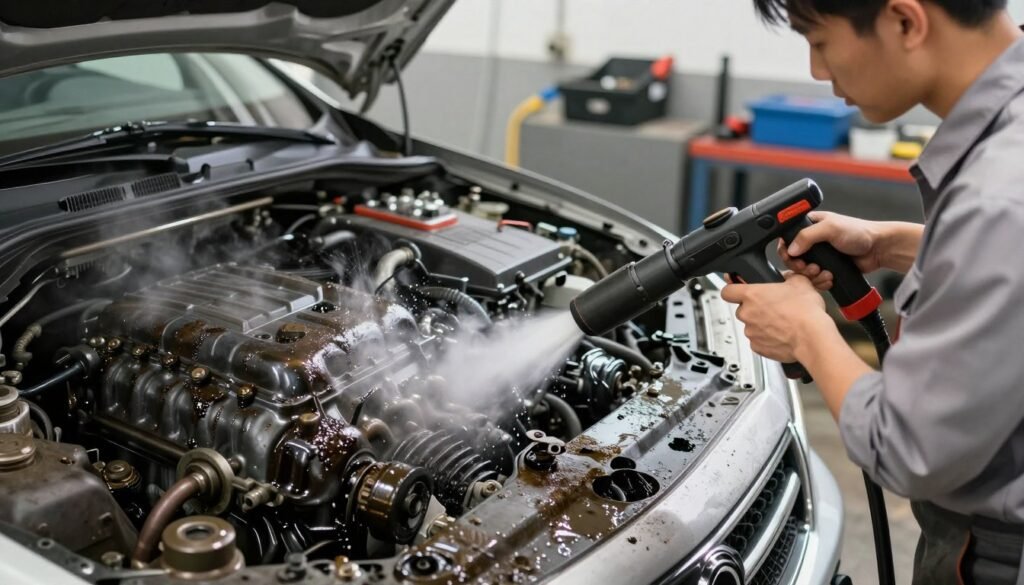
How High-Temperature, Low-Pressure Vapor Lifts Grime
After the motor cools, a technician shields connectors and the air intake. Targeted, low-pressure vapor loosens grease and dirt. Wiping removes moisture and residue, followed by a visual check.
Why a Clear Bay Helps Reveal Leaks
Fresh oil or coolant marks stand out after buildup is removed. That evidence can guide an inspection, ECU scanning appointment, or repair. Care does not fix a leak, but it can save money by finding its source sooner.
Benefits for Hoses, Wiring, and Vehicle Value
Oil can soften rubber hoses and cut service life by 50–75%; some replacements cost over $200. A clear bay also supports drivetrain health, synthetic fluid analysis, service records, and resale confidence. Basic care costs about $50–$90, while full detailing may reach $180. Most drivers need it once or twice yearly; harsh use may require four- to six-month intervals.
| Method | Water and precision | Daily-driver fit |
|---|---|---|
| Low-pressure vapor | Minimal water; targeted | Strong choice with low residue |
| Pressure washing | High water; broad force | Higher component risk |
| Chemical degreasing | Moderate water; residue possible | Useful with careful rinsing |
| Manual wiping | Very low water; limited reach | Best for light dirt |
Safe Engine Cleaning Methods for Daily Drivers
A safe approach starts with preparation, not pressure. Let the engine cool fully before service. A technician then covers the alternator, battery, sensors, wiring connectors, air intake, and air filter. This care limits moisture exposure during engine steam cleaning.
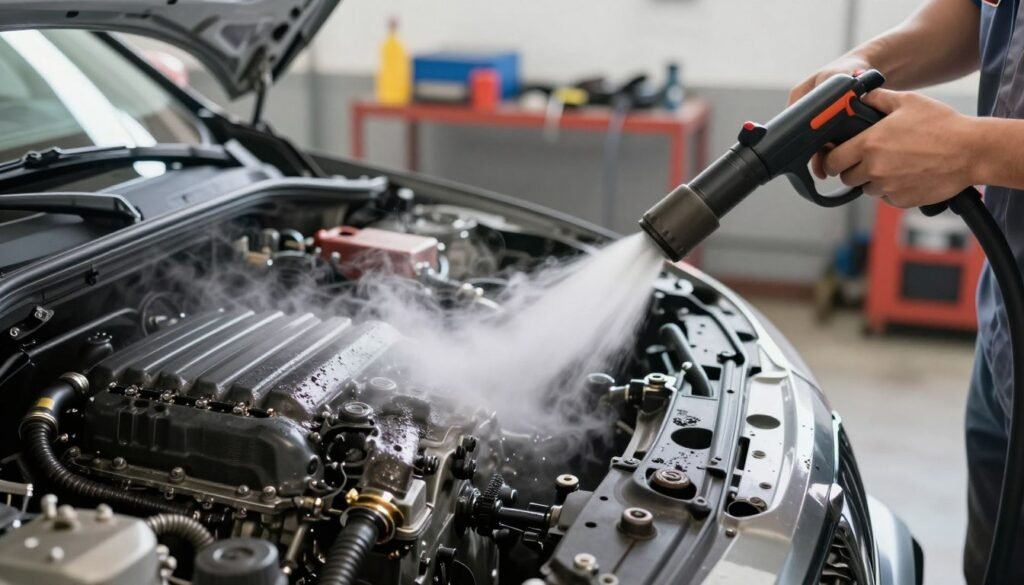
Protecting Electrical Parts Before Treatment
MotorWeek warns that vapor may enter connectors, condense, and cause corrosion. That damage can trigger warning lights, poor performance, or failed emissions tests. Grease and oil may also loosen wire-harness tape. A technician should stop if moisture reaches an exposed electrical area.
Before any detailing service, inspect for nests, chewed cables, bare insulation, and residue. AdeLia Zhang’s pack-rat experience shows why this step matters. Existing issues may need an ECU scan, connector check, or repair before the process begins.
- Use controlled equipment and avoid direct spray on connectors.
- Protect the intake and filter from moisture.
- Choose service every four to six months in harsh Arizona conditions.
| Area | Safe action | Reason |
|---|---|---|
| Electrical connectors | Shield and avoid direct vapor | Helps limit corrosion |
| Battery and alternator | Cover before treatment | Reduces moisture risk |
| Air intake and filter | Seal openings carefully | Protects airflow and operation |
Common Engine Cleaning Mistakes That Can Cause Problems
Small shortcuts under the hood can turn routine care into expensive repair work. Avoid these common errors during engine steam cleaning.
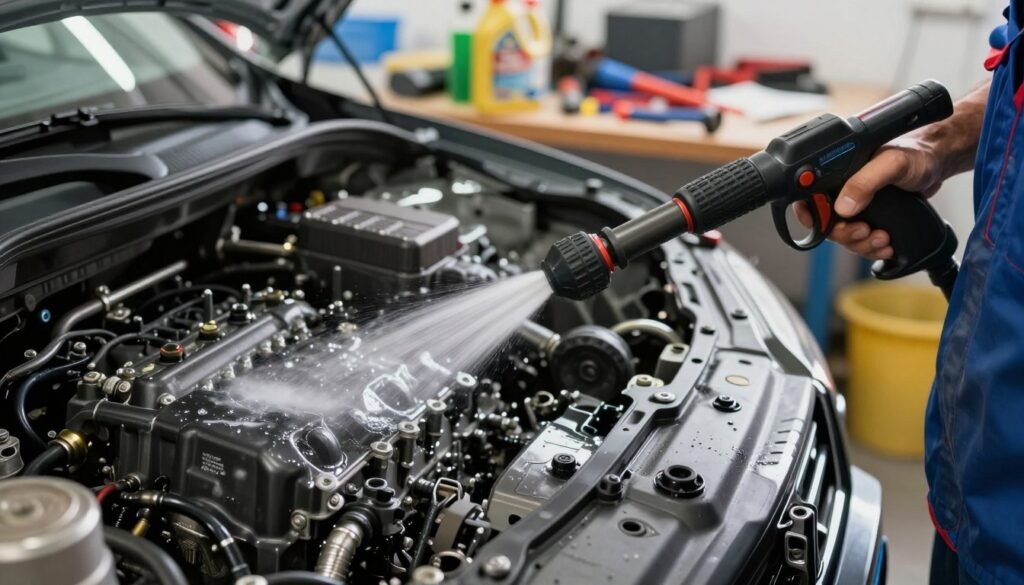
- Working on a hot motor: Let the car cool first. A sudden temperature change, water, and electrical parts can create avoidable issues.
- Using too much pressure: Forceful spray or careless steam may drive moisture into connectors. MotorWeek warns that corrosion can trigger warning lights, poor performance, and failed emissions tests.
- Applying degreaser carelessly: Follow the label, shield the battery and alternator, and control runoff near wiring and intake parts. Never assume every product suits every surface.
- Leaving grease on hoses: Oil can reduce hose life by 50–75%. A modern radiator hose may cost more than $200 before installation.
- Skipping dry-out and inspection: Wipe surfaces, allow moisture to escape, and check for loose tape, damaged wires, grime, or fluid marks.
Steam cleaning and chemicals remove residue, but they do not fix leaks, failed sensors, or damaged harnesses. Pair professional detailing with diagnostics when a car shows rough running, fluid loss, warning lights, or recurring electrical issues.
Conclusion
Professional engine steam cleaning helps Tucson daily drivers spot leaks sooner and check hoses and wiring. Steam cleaning supports preventive maintenance, not mechanical repair. Pair it with ECU scans, fluid analysis, or diagnostics when symptoms appear. Ace Tunes invites owners to request service today, combine auto detailing packages, and protect long-term value. Karen Bevensee’s Hyundai Sonata experience shows how presentation can reassure buyers. Cool Auto Detail’s 34-plus years and more than 850 five-star reviews also reflect the value of trusted vehicle care. This investment may save money and keep your car ready for the road.
Who benefits from professional bay care?
Tucson daily drivers benefit when oil, dust, or residue clouds inspections. Professional care supports leak checks, hose awareness, wiring review, routine upkeep, and ECU scanning without replacing mechanical diagnosis.
What does this service do?
It loosens stubborn buildup with controlled vapor, then technicians wipe surfaces and inspect visible concerns. The process improves access and presentation, but it cannot repair leaks, sensors, or damaged harnesses.
How should owners choose a provider?
Choose a qualified provider that shields electrical parts, explains risks, and offers documented results. Ask Ace Tunes about a tailored service plan, related packages, and diagnostic referrals when symptoms appear.
Why schedule this care promptly?
Prompt care keeps residue from hiding fresh leaks and supports resale presentation. Karen Bevensee’s Sonata experience shows how a well-kept car can reassure buyers and protect value over time.