Ever notice some cars feel effortlessly powerful while others barely keep pace? The difference frequently comes down to smart engine tuning — the process of adjusting your vehicle’s internal combustion engine and control systems so the engine delivers better power, improved fuel economy, or a specific driving character you want.
Engine tuning traces back to racing and hot-rod culture of the mid-20th century, but today it’s mainstream: hobbyists and everyday drivers alike tune engines to match real-world needs (commuting, towing, or track use) while keeping reliability in mind.
Most successful tunes start with the fundamentals: how air and fuel combine in the combustion chamber and how ignition timing and control systems respond. A well-executed tune makes the car more responsive, can increase usable power, and often improves fuel economy — though results vary by vehicle, engine type, and the extent of modifications.
Key Takeaways
- Engine tuning can improve vehicle performance and fuel efficiency when done correctly.
- Understanding air-fuel interaction and ignition timing is essential to effective tuning.
- A well-tuned engine delivers more usable power and a better driving experience.
- Modern tuning techniques grew out of historic racing innovations but now use advanced software and data tools.
- Start with fundamentals and professional diagnostics to avoid common pitfalls — see how to get started in the sections below (or visit our services).
Understanding Engine Performance Fundamentals
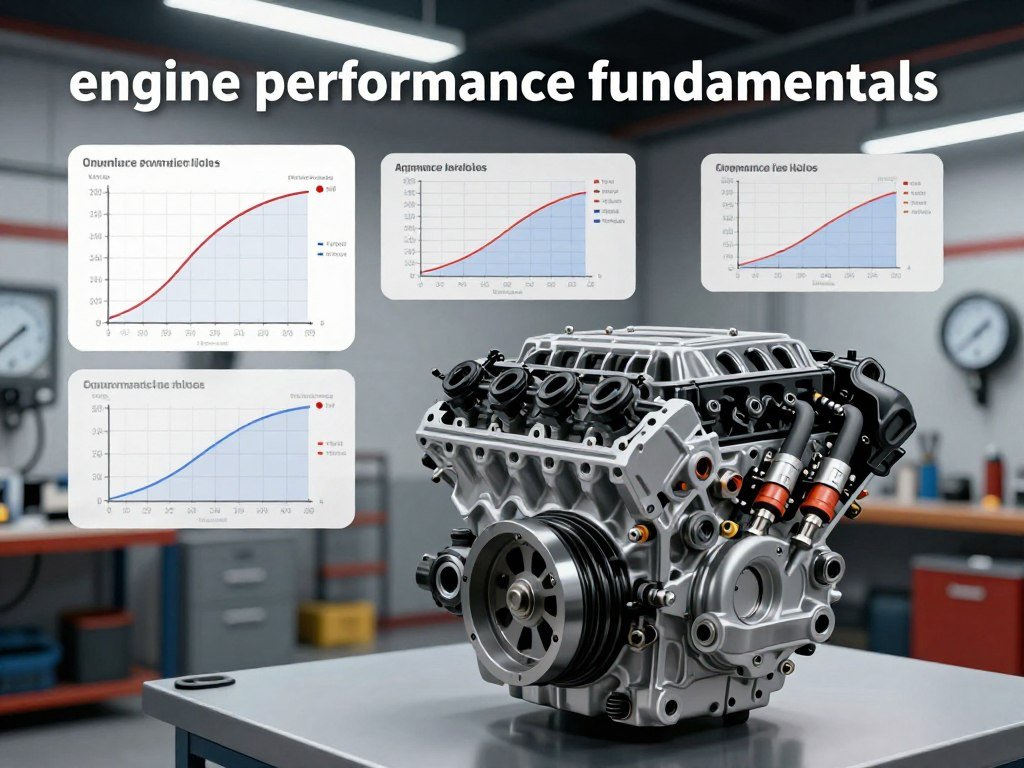
Performance differences between vehicles usually come down to how effectively the engine manages air and fuel during combustion. Optimizing the air-fuel mixture and related control settings is the foundation of any successful tune because it directly affects power, efficiency, and emissions.
The ideal air-to-fuel ratio depends on the fuel type and operating condition: for gasoline engines the stoichiometric ratio is about 14.7:1 (air:fuel) for complete combustion under cruise conditions, while richer mixtures (lower ratios) are used for high-load or boosted operation. Properly matching fuel ratio to load and ignition timing helps the engine produce more usable power without wasting fuel.
Ignition timing determines when the spark plug fires relative to piston position. Correct timing avoids knock (detonation) and yields smooth, efficient combustion. Retarded timing (spark too late) typically causes sluggish throttle response and higher exhaust temperatures, while overly advanced timing can increase power but risks knocking and engine damage if pushed beyond safe limits.
Keep in mind diesel engines use different combustion characteristics and fuel ratios than gasoline engines; tuning strategies and safe timing windows differ accordingly. Always reference manufacturer guidance or professional diagnostics when adjusting air, fuel, or ignition settings.
Quick Glossary
- Air-fuel ratio: The amount of air compared to fuel entering the combustion chamber (e.g., 14.7:1 for gasoline stoichiometric).
- Ignition timing: When the spark occurs; measured in degrees before or after top dead center (BTDC/ATDC).
- Knock/detonation: Uncontrolled combustion that can damage the engine; usually prevented by correct timing and mixture.
Understanding these fundamentals — air, fuel, mixture, combustion, and timing — gives you a reliable way to evaluate tuning changes and predict their impact on your vehicle’s performance and economy. For diesel-specific guidance, see our diesel services.
Engine Tuning for Maximum Performance
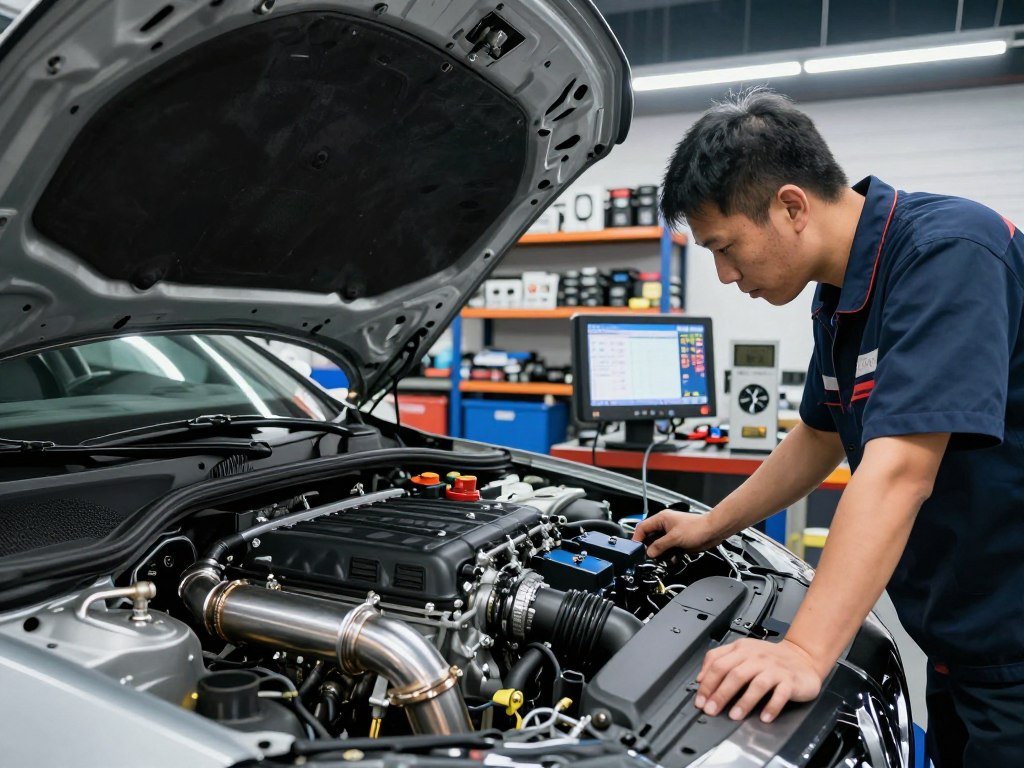
Want a car that launches harder, responds faster, or simply delivers better real-world drivability? Professional tuning aligns the engine, control systems, and hardware to a clear goal — more power on the track, improved economy for daily driving, or a balanced compromise for mixed use.
Modern tuning relies on specialized diagnostic tools and software to edit the engine management map safely. Industry references (including recent CarTech resources) show how software-based adjustments can refine fuel delivery, ignition timing, boost control, and throttle mapping to produce measurable gains in throttle response and usable power without unnecessary risk to reliability.
Data logging is central to that process: technicians start with baseline logs (idle behavior, part-throttle, full-throttle), make incremental changes, and then validate results with post-change logging. A typical professional workflow looks like: diagnostics → baseline data logging → staged adjustments → dyno or road validation → final data logging and backup of the stock map.
Hardware changes often support software tuning. For example, reducing exhaust back pressure with a better-flowing exhaust lets the engine expel gases more efficiently, improving output under load. But remember: hardware and software should be matched — a big exhaust alone won’t give gains if the engine’s fueling and control settings aren’t adapted.
If you’re considering a tune, plan for a dyno or logged road session so you can see before/after RPM and torque curves. That real data helps quantify gains and ensures the tune meets your driving needs. For a list of common pitfalls and warning signs to watch for with diesel tunes, see our red flags in diesel truck tunes.
Boosting Horsepower and Torque
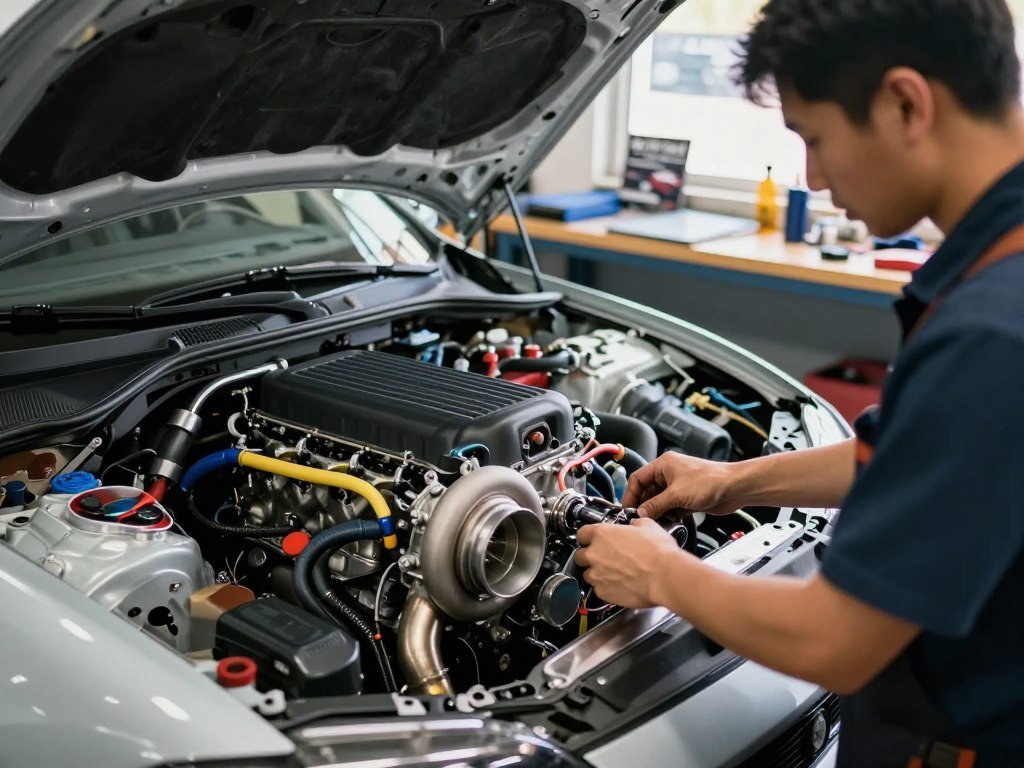
Horsepower and torque are the two measurements that define how an engine feels on the road. Horsepower describes how much work an engine can do over time — it’s what determines how quickly a car can accelerate at higher speeds. Torque is the immediate twisting force an engine produces, felt as the shove you get off the line or when towing a heavy load.
To put it in practical terms: torque helps you get moving (low-RPM grunt), while horsepower keeps you accelerating at speed (high-RPM work). Typical passenger cars measure torque in lb-ft (or Nm) and horsepower in hp; dyno charts plot both to show where the engine produces its best output across the RPM range.
| MetricDefinitionImportance | ||
| Horsepower | Measure of work done over time (hp) | Critical for acceleration at higher speeds and passing |
| Torque | Twisting force produced by the engine (lb-ft / Nm) | Essential for low-speed acceleration, towing, and load-carrying |
| High Torque | Power available at low RPMs | Ideal for towing, off-road, and hauling |
Through tuning and selective modifications you can shift the engine’s power band: a cam or turbo change with matched fuel and ignition adjustments can move peak torque to lower RPMs for better everyday drivability, or tune for higher-RPM horsepower suited to track use. Always verify gains on a dyno or with logged road runs so you can see the before/after torque and horsepower curves.
Example scenarios: a daily-driven pickup benefits from low-end torque for towing, while a sport compact may be tuned to favor peak horsepower for track acceleration. Matching your tuning goals to how you use the car ensures the best balance of power, efficiency, and reliability.
Optimizing ECU Settings and Software Adjustments

Adjusting the vehicle’s software is one of the most effective, non-invasive ways to change how an engine behaves. Rewriting the management firmware (commonly called reflashing the ECU) updates the control logic that governs fuel delivery, ignition timing, throttle mapping, boost control, and emissions strategies — often improving throttle response and fuel economy when done correctly.
Modern diagnostic tools and logging software let tuners monitor live sensor data and confirm the effect of each change. Think of the process as iterative: gather baseline logs, apply a conservative change (for example, tweak throttle mapping or adjust fuel trims), then re-log to verify improvements and rule out adverse effects like high exhaust temperatures or knock.
Pre-reflash checklist
- Backup the stock map and full system data before any changes.
- Confirm emissions and warranty implications in your jurisdiction — some reflashes can void warranties or violate local laws.
- Ensure hardware is compatible (fuel system, cooling, sensors) with the intended power level.
- Plan for dyno or logged road validation after changes to capture before/after data.
While many manufacturers use ECUs from major suppliers, exact hardware and firmware differ between makes and models — which is why professional tuners use model-specific software and tools. Always work with a tuner who practices data-driven changes and keeps a stock backup so you can revert if needed.
Common safe software adjustments include smoother throttle mapping for better drivability, conservative ignition timing optimization for improved efficiency, and fuel trim corrections to match upgraded intake or exhaust hardware. However, note the risks: aggressive reflashes can increase component stress, affect emissions compliance, or shorten service intervals. If you’re unsure, book a diagnostic and data-logging session with a qualified shop to evaluate the potential benefits and trade-offs.
Practical Modifications for Better Fuel Economy
Want measurable improvements in everyday fuel economy without drastic engine rebuilds? Targeted, practical modifications to the intake, exhaust, and fuel delivery systems are often the most cost‑effective way to improve combustion efficiency and deliver a better balance of power and economy.
Enhancing Air Intake and Exhaust Flow
Upgrading the intake lets the engine breathe more easily. A quality high‑flow air filter and a well-designed cold air intake can increase available oxygen for combustion, which helps the engine run closer to its ideal air‑fuel mixture under load. That can translate to sharper throttle response and modest economy gains — results will vary by car and setup.
On the exhaust side, reducing back pressure with smoother, larger‑diameter piping or a higher‑flow muffler helps exhaust gases exit more efficiently. Combined with matching fuel and timing adjustments, improved exhaust flow can boost output during high load and reduce pumping losses at cruise, which may improve fuel consumption in some vehicles.
Note: changes to intake or exhaust that affect emissions components (catalytic converters, EGR) can be illegal in some areas and may void warranties. Don’t remove emissions hardware; instead, upgrade to compliant performance parts and retune the fuel ratio to match the new airflow.
Tuning the Fuel Delivery System
Tuned fuel delivery ensures the engine receives the correct amount of fuel for the increased air supply. Simple steps include recalibrating fuel trims in the management software or upgrading injectors and the fuel pump on higher‑power builds. Precise fuel ratio control (air‑fuel ratio) is critical — too rich wastes fuel and fouls components, too lean risks detonation and engine damage.
A 2019 study found throttle body increases can improve airflow on certain engines; however, benefits depend on intake port design and overall system balance. In practice, adding a larger throttle body without tuning the fuel map rarely produces optimal results — hardware and software must be matched for reliable gains.
| ModificationBenefitImpact on Performance | ||
| High‑Flow Air Filter / Cold Air Intake | Increases oxygen available | Improved combustion efficiency; better throttle response |
| Lower Back‑Pressure Exhaust | Faster gas expulsion | Better high‑load output; possible cruise efficiency gains |
| Larger Throttle Body | Enhances airflow at higher demand | Increased horsepower potential when paired with tuning |
| Fuel Delivery Tuning / Upgraded Injectors | Optimizes fuel ratio for new airflow | Boosts efficiency and power; prevents lean/rich conditions |
Typical outcome: for a stock commuter car, expect modest single‑digit MPG improvements when changes are conservative and matched with a proper tune; aggressive hardware swaps without tuning often yield little to no economy benefit. Before you modify parts, consult a professional to review compatibility (fuel system capacity, sensors) and plan a data‑logged validation run after installation. For help matching parts to goals, see our services.
Advanced Techniques in Engine Adjustments
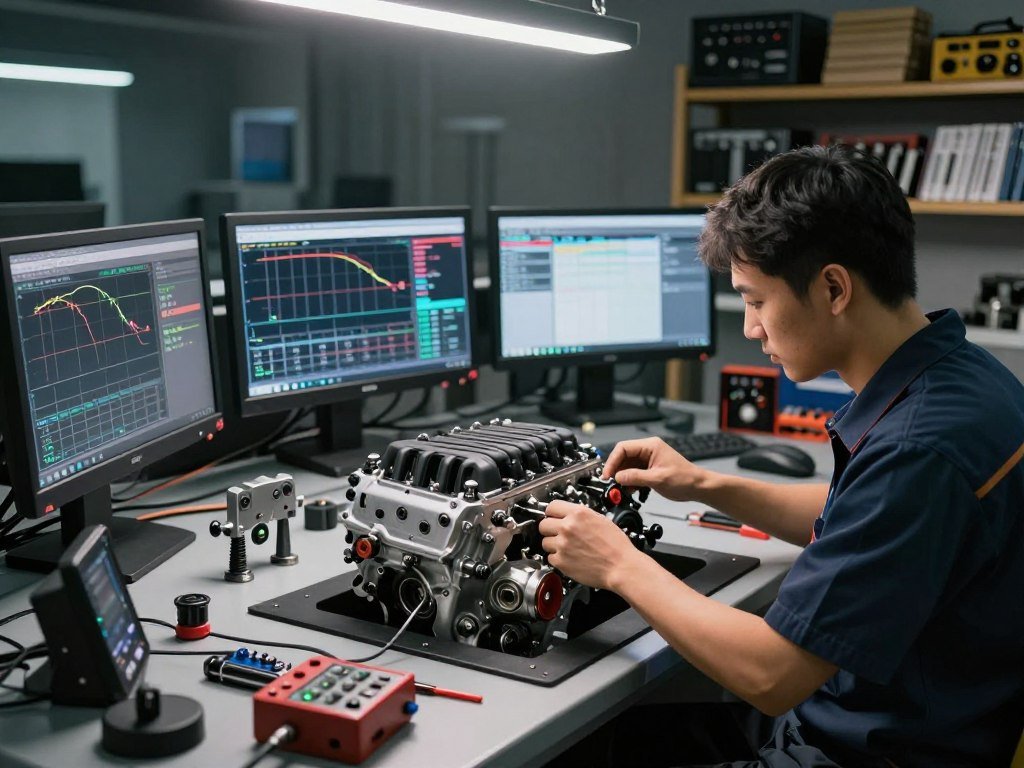
When basic tweaks aren’t enough, advanced engine tuning techniques let you tailor the power and efficiency curve precisely to your goals. Two common approaches are remapping the factory firmware (editing the engine management map) and chip tuning or piggyback modules that alter signals to specific control systems. Each method has pros and cons depending on the vehicle’s software and hardware.
Advanced adjustments typically include fine‑tuning ignition timing, managing boost/pressure on forced‑induction engines, and changing fuel and throttle maps across the RPM range. These changes let you create purpose-built profiles — for example:
- City map: smoother torque delivery, earlier shift points, conservative timing for fuel economy and drivability.
- Sport/track map: increased boost and more aggressive ignition timing for peak horsepower and quicker throttle response.
Important safety and compatibility notes: manufacturers sometimes de‑rate engines to meet emissions and drivetrain longevity targets; pushing beyond those limits requires matching supporting parts (fuel system capacity, intercooling, cooling systems, strengthened internals) and professional validation. Boost or ignition advances that exceed the engine’s mechanical and thermal limits will increase the risk of knock, excessive pressure/temperature, and component failure.
Always validate advanced changes on a dyno or with detailed data logging across the intended operating range. Work with an experienced tuner who understands the specific engine control software and can tailor adjustments across the full map — that way you get the intended performance range without sacrificing long‑term reliability.
Maintaining Reliability while Increasing Performance
Increasing performance is rewarding, but without careful planning it can shorten engine life. Balancing power gains with durability means addressing thermal loads, mechanical limits, emissions compliance, and ongoing upkeep so your vehicle remains dependable.
Thermal management is a top priority: excessive heat accelerates wear on consumables and critical parts. Practical upgrades include improved cooling (larger radiators or fans), upgraded oil coolers, and heat shields or thermal wraps to lower under‑bonnet temperature and reduce heat soak into sensitive components.
Respect manufacturer tolerances and the mechanical limits of your engine. Forged pistons, stronger head studs, or upgraded bearings may be necessary when moving to significantly higher boost or advanced ignition timing. Follow engine‑builder or OEM guidance rather than pushing components beyond their rated range.
Emissions and warranty considerations must be part of the decision process. Some software or hardware changes can void warranties or violate local emissions laws. Before you modify, check regulations in your area and keep emissions hardware functional; if needed, use compliant performance parts and a professional tune to maintain legal operation.
Pre‑upgrade checklist
- Inspect cooling system capacity (radiator, fans, hoses) and oil cooling.
- Verify fuel system capacity and sensor health (injectors, pump, MAF/MAF-like sensors).
- Assess mechanical condition (compression, head gasket, bearings) for safety margin.
- Confirm emissions/warranty implications and have a plan to validate compliance.
| ConsiderationImportanceBest Practices | ||
| Heat Management | Prevents premature wear | Upgrade cooling, add heat shields |
| Manufacturer Tolerances | Ensures reliability | Match upgrades to engine limits; consult builders/OEM |
| Emissions Compliance | Meets regulations | Use compliant parts; validate with testing |
| Maintenance Frequency | Maintains durability | Shorten service intervals; check critical parts regularly |
Small preventative steps — upgraded cooling, scheduled inspections, and conservative, validated tuning — will let you enjoy added power with minimal compromise to longevity. For guidance tailored to your vehicle and goals, consult a professional service and see our about page for more information.
Real-World Tuning Success Stories
Real-world examples show how data-driven tuning delivers both power and efficiency when done correctly. One representative shop, Ace Tunes, illustrates a methodical approach: baseline logging, staged adjustments to the management system, and post-change validation to confirm gains without compromising reliability or emissions compliance.
For instance, a typical Ace Tunes project begins with a full data log and dyno baseline, followed by matched intake/exhaust upgrades and conservative software changes. After validation, many customers report noticeably improved throttle response and a broader usable power band while retaining acceptable fuel economy and emissions behavior (results vary by vehicle and configuration).
While no tuner can promise identical outcomes for every car, Ace Tunes’ emphasis on measured data and stepwise tuning demonstrates that a professional, experience‑led tune is the most reliable way to unlock a modern engine’s potential. To see detailed case studies or request a consultation, contact a professional tuner or view documented projects where available.
Conclusion
Unlocking your vehicle’s potential requires a measured, knowledge‑driven approach: thoughtful engine tuning blends adjustments to air, fuel, and ignition timing with the right hardware, software settings, and validation to deliver both better performance and improved fuel economy.
Prioritize reliability by using high‑quality parts, following manufacturer tolerances, and working with experienced professionals who validate changes with data logging or a dyno. Remember legal and warranty considerations—some software or hardware changes can affect emissions compliance or void coverage, so confirm rules in your area before proceeding.
Ready to take the next step? Book a consultation or request a data‑logged dyno tune to get a personalized plan that matches your driving needs and safety margins. For tailored solutions, visit our agricultural and construction equipment services page or contact a certified tuner to discuss the best next step for your vehicle.